




A content marketing strategy is the foundation behind successful content. Instead of publishing random blog posts or social media updates, it provides a clear plan for creating content that attracts your target audience, addresses their pain points, and supports your overall marketing goals.
Many small businesses create content consistently but still struggle to see results. In most cases, the problem isn’t the content itself — it’s the lack of a clear strategy guiding those content marketing efforts.
When you develop an intentional content marketing strategy, your content begins working together to increase visibility, build authority, and generate leads for your business.
In this guide, you’ll learn what a content marketing strategy is, how it connects to SEO, and the steps you can follow to build an effective plan for your business.
AFFILIATE DISCLAIMER: I SOMETIMES LINK TO PRODUCTS AND SERVICES TO HELP COVER THE COSTS OF RUNNING THIS BLOG. THERE’S NO EXTRA COST TO YOU – AND I ONLY RECOMMEND PRODUCTS THAT I’VE BOTH USED PERSONALLY AND THINK ARE QUALITY PRODUCTS THAT HELP WITH EFFICIENCY. PLEASE READ MY AFFILIATE DISCLOSURE FOR MORE INFORMATION. THANKS FOR YOUR SUPPORT!
Table of Contents
What Is Content Marketing Strategy?
A content marketing strategy is a long-term plan for creating and distributing valuable content that attracts and engages your ideal audience.
According to the Content Marketing Institute, content marketing focuses on creating and distributing valuable, relevant content to attract and retain a clearly defined audience.
Rather than publishing content randomly, a strategy focuses your content marketing efforts around topics that your audience is actively searching for. These topics are typically aligned with your business goals and the problems your customers are trying to solve.
A strong strategy typically includes:
• A clearly defined target audience
• A structured content marketing plan
• Content topics that address audience pain points
• Consistent publishing of blog posts or other content formats
• Distribution across the right marketing channels
Without a clear strategy, content often becomes inconsistent and disconnected from your broader marketing goals.
Pin it on Pinterest!
Content Marketing Strategy vs Content Strategy
The terms content marketing strategy and content strategy are often used interchangeably, but they serve slightly different purposes.
A content strategy focuses on the planning, organization, and management of content across your business. It determines what content should exist, how it should be structured, and how it aligns with your overall marketing strategy.
A content marketing strategy, on the other hand, focuses on how content is used to attract and convert your target audience.
In simple terms:
Content strategy = the foundation and structure
Content marketing strategy = how you use content to grow your business
If you’d like a deeper explanation, you can read my article on content marketing vs content strategy.
Steps to Creating a Content Marketing Strategy
Creating a content marketing strategy doesn’t need to be complicated. Most successful strategies follow a few core steps.
1. Define Your Target Audience
The first step in building a successful strategy is understanding your target audience.
You need to know:
• Who your ideal customer is
• What questions they are asking
• What problems they need help solving
• What type of content they prefer
When your content speaks directly to your audience’s pain points, it becomes significantly more valuable and easier to discover through search engines or social platforms.
2. Identify Your Core Content Topics
Next, determine the main topics your business should create content around.
These topics should align with:
• Your services or expertise
• What your audience is searching for
• The problems your product or service solves
Many businesses organize their content marketing efforts around a few core topic categories that build authority over time.
Blog posts are often the foundation of this strategy. If blogging is part of your content plan, you may find my guide on blogging and content marketing helpful.
Related Article: How to Pick Your Content Pillars
3. Create a Content Marketing Plan
Once you understand your audience and topics, the next step is creating a structured content marketing plan.
Your plan should outline:
• Content topics
• Publishing frequency
• Content formats (blog posts, guides, videos, etc.)
• Promotion channels
Many small businesses find it helpful to follow a repeatable framework when building their strategy. You can see an example in my content strategy template.
4. Establish Content Guidelines
Consistency is an important part of effective content marketing.
A documented content style guide helps ensure your content maintains a consistent tone, voice, and structure across platforms.
This helps your brand feel more recognizable and professional over time.
If you don’t already have one, creating a simple content style guide is a valuable step in strengthening your overall content strategy.
If you want a detailed framework for planning your content and organizing topics, check out my guide to content strategy framework.
Factors to Consider When Developing a Content Marketing Strategy
Not every strategy looks the same. Several factors influence how your content marketing plan should be structured.
Your Business Goals
Your strategy should support your broader marketing goals.
For example, you may want to:
• Increase organic website traffic
• Generate leads
• Build brand authority
• Educate potential customers
Each goal may influence the type of content you prioritize.
Related Article: Content Buckets vs Content Pillars: What’s the Difference? (With Examples)
Your Audience’s Pain Points
The most successful content marketing efforts focus on solving real problems.
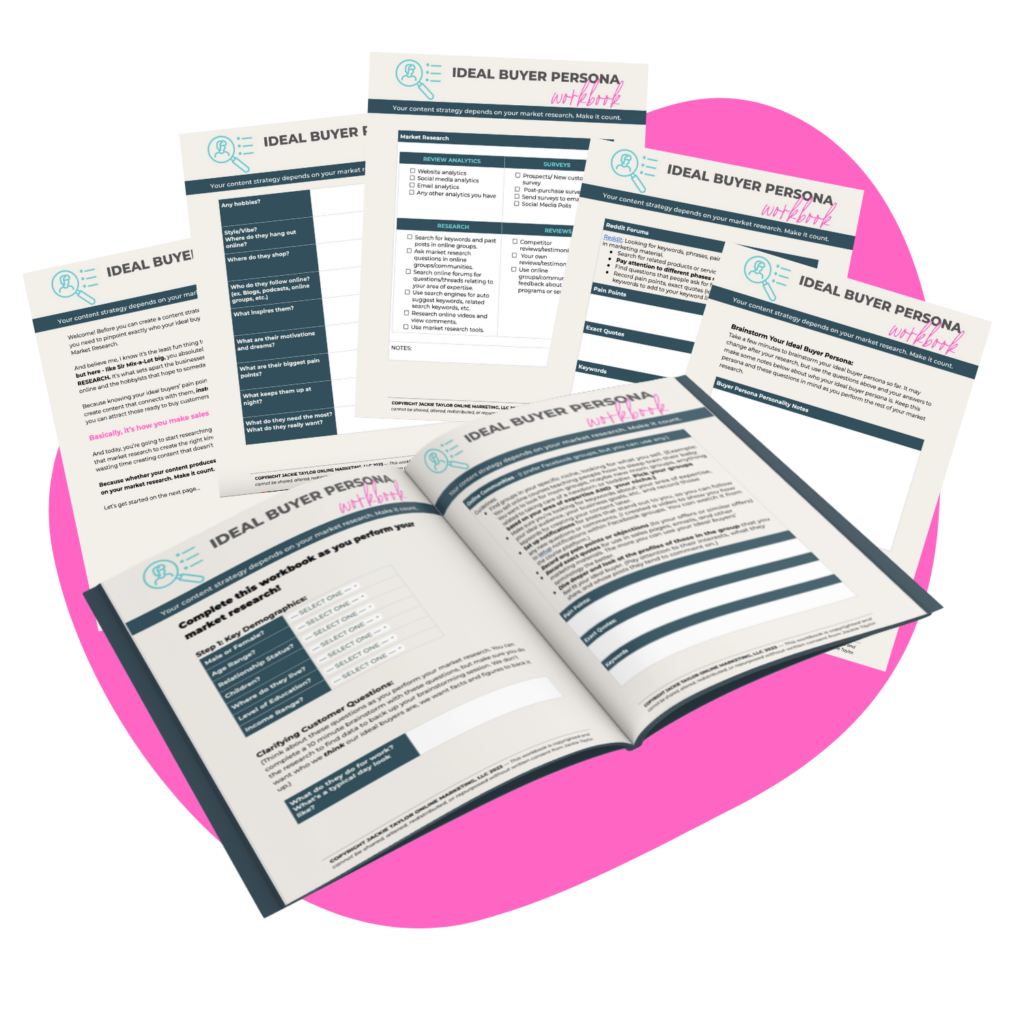
When your content answers the questions your audience is already searching for, it becomes significantly more valuable to both readers and search engines. Learn how to find your audience’s pain point in this Market Research Guide and Workbook.
How Often Should You Publish Content?
A sustainable content marketing strategy should match the time and resources available in your business.
Consistency is more important than publishing a large volume of content. Two well-written blog posts each month can often produce better long-term results than inconsistent publishing.
Inconsistent publishing might look like five pieces of content one month followed by three months of nothing. Instead, a consistent schedule — such as publishing one piece of content each month for five months — helps build momentum and supports your long-term content marketing efforts.
Start with what you can handle. Get really good at it. Once you feel like you can do it with your eyes closed, then add more.
This is one area where I think people really fail. They start too much, too soon. Then start to question everything. Or worse yet, they quit completely. Slow and steady wins the race.
Related Article: 10 Content Marketing Tips
What Are the Benefits of a Content Marketing Strategy?
A well-developed content marketing strategy offers several long-term advantages for small businesses.
1. Increased Organic Traffic
Publishing helpful content consistently allows search engines to understand your expertise and rank your content for relevant topics.
Over time, your blog posts can attract visitors who are actively searching for solutions. Research from HubSpot consistently shows that businesses that prioritize blogging generate significantly more website traffic and leads than those that do not.
2. Stronger Brand Authority
When your content consistently solves problems and educates your audience, it positions your business as a trusted expert.
This authority can make it easier for potential customers to choose your services over competitors.
3. Higher Quality Leads
Content marketing helps potential customers learn about your expertise before they ever contact you.
This means the people reaching out often already trust your knowledge and are closer to making a buying decision.
Content Marketing and SEO
Content marketing and SEO work together to increase visibility in search engines.
SEO helps your content appear in search results, while content marketing provides the helpful information users are looking for.
Google has also emphasized the importance of creating content that is helpful and written for people first, rather than purely for search engines.
A strong content marketing strategy often includes:
• Keyword research
• Topic clusters
• Internal linking
• Optimized blog posts
When these elements work together, your content marketing efforts can
Learn more about SEO to better your content marketing efforts and generate more consistent organic traffic over time. Read the Ultimate SEO Guide.
Related Article: 10 SEO Myths That Are Secretly Hurting Your Website Traffic
What Are the Different Types of Content Marketing?
Content marketing includes many different formats beyond blog posts.
Some of the most common types include:
• Blog posts
• Educational guides
• Email newsletters
• Social media content
• Videos
• Podcasts
• Case studies
Each format can support a different stage of your content marketing plan.
If you want a deeper explanation of these formats, you can read my guide on types of content marketing.
Related Article: Evergreen Content Strategy
Share it on Pinterest!
Content Marketing Strategy Example for Small Businesses
To better understand how this works, here’s a simplified example of a content marketing strategy for a small business.
Business: Website design studio
Target audience: Small business owners launching a new website
Their content marketing plan might include:
• Blog posts explaining website best practices
• SEO content answering common website questions
• Educational guides that walk through the design process
• Email newsletters sharing helpful resources
Each piece of content addresses common pain points while gradually positioning the business as an expert.
Over time, these content marketing efforts help attract organic traffic and convert readers into clients. It’s always best to try to be helpful first and sell second. It’s makes for a more genuine experience. And it creates loyal buyers.
Related Article: The Best Content Marketing Strategies
Common Content Marketing Strategy Mistakes to Avoid
Even businesses that publish content regularly can struggle to see results if their strategy isn’t structured well.
Some of the most common mistakes include:
Creating content without a defined audience
If you’re trying to speak to everyone, your message often resonates with no one. A strong content marketing strategy starts with understanding your target audience and the specific problems they are trying to solve.
When your content addresses real pain points, it becomes far more valuable and easier for the right people to find through search.
Publishing blog posts without a plan
Many businesses publish blog posts based on ideas that come up in the moment. While this can occasionally produce helpful content, it rarely leads to consistent growth.
A structured content marketing plan helps ensure your topics connect to your broader business goals and work together to support your overall content marketing efforts.
Ignoring SEO
Even helpful content can struggle to perform if it isn’t optimized for search engines. Keyword research, clear headings, and internal links help search engines understand what your content is about and who it should be shown to.
How Often Should I Update My Content Marketing Strategy?
Your content marketing strategy shouldn’t stay static forever.
Most businesses benefit from reviewing their strategy every 6 to 12 months.
During this review, look at:
• Which blog posts are generating traffic
• Which topics attract your target audience
• Which content is converting readers into leads
Updating your strategy regularly allows you to refine your content marketing efforts and focus on what works best.
Related Article: Killer Content Distribution: Maximizing Visibility and Engagement
Final Thoughts on Content Marketing Strategy
A content marketing strategy gives your content direction and purpose.
Instead of publishing random blog posts, a clear strategy helps you create content that supports your business goals and provides real value to your audience.
Over time, consistent and effective content marketing can help small businesses increase visibility, attract qualified leads, and build long-term authority online.
If you’re ready to create your own strategy, you can start with my content strategy template, which walks through the process step by step.
And while this post walks through how to create and implement a content marketing strategy to attract and convert your audience, you might also want to understand how to plan and organize content strategically. That’s covered in my content strategy framework guide.
Frequently Asked Questions About Content Marketing Strategy
What is included in a content marketing strategy?
A content marketing strategy typically includes audience research, content topics, a publishing schedule, SEO keyword research, and a plan for promoting and distributing content.
These elements help ensure your content marketing efforts support your business goals and reach your target audience.
What is the goal of content marketing?
The goal of content marketing is to attract and engage your target audience by providing valuable information that solves their problems.
Over time, this helps build trust and positions your business as an expert in your industry.
How long does content marketing take to work?
Content marketing is a long-term strategy. Many businesses begin seeing results within 3–6 months, but stronger results often appear after 6–12 months of consistent publishing.
What is the difference between content marketing and digital marketing?
Digital marketing is the broader category that includes many marketing channels such as advertising, email marketing, and social media.
Content marketing is one component of digital marketing that focuses specifically on creating valuable content to attract and educate an audience.
Related Posts



Recent Articles:
- 17 Amazon Work From Home Essentials That Make Running an Online Business Easier
- The Best SEO Tools for Small Business in 2026 (My Top Picks)
- Content Buckets vs Content Pillars: What’s the Difference? (With Examples)
- How to Find Blog Keywords That Drive Traffic (Step-by-Step Guide)
- What Is Content Marketing Strategy? A Simple Guide for Small Businesses


+ show Comments
- Hide Comments
add a comment